What we work on

Research

From the geometry of high-dimensional data to ink on ancient sherds.

Ancient Script & Text Evolution
01

Ancient Script & Text Evolution

How and why writing changes over time — its letterforms, its language, and the societies behind it.

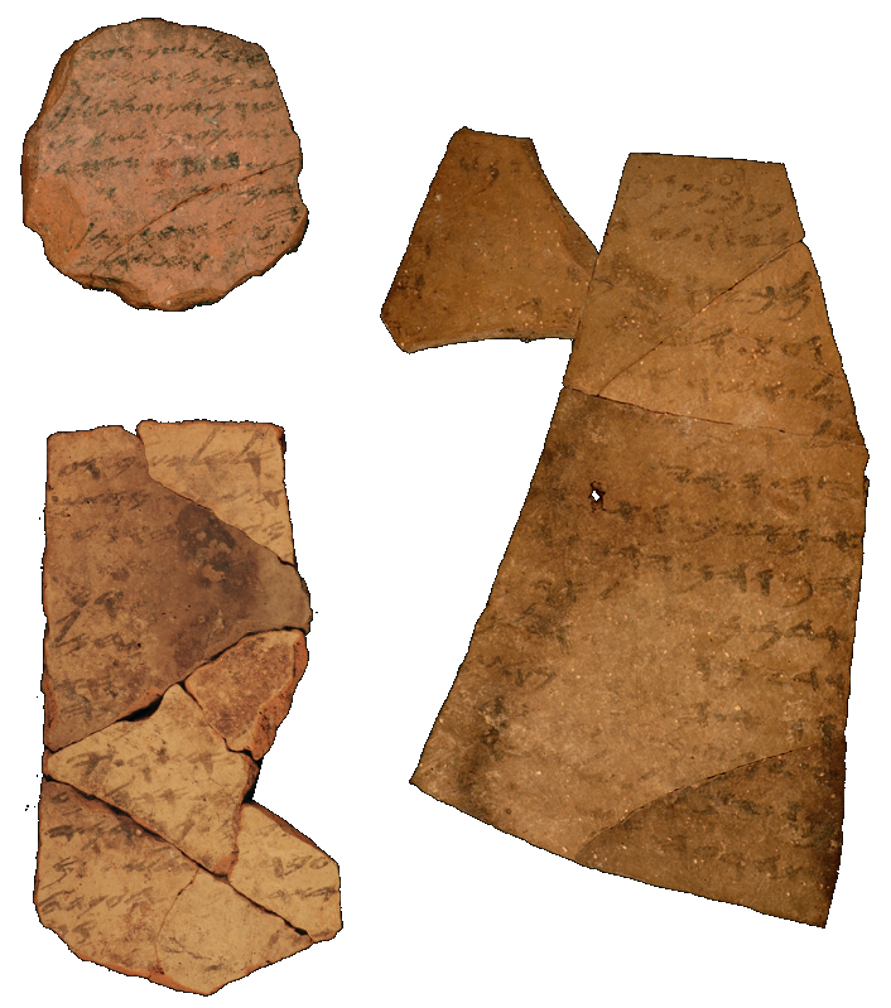
Our flagship program treats writing as something that evolves — through reproduction, variation, and selection: scribes copy existing signs, copies differ through unavoidable neuro-muscular noise, and cultural context, not conscious design, decides which variants persist. At the level of the individual letterform we use the kinematic (ΣΛ) theory of rapid human movement; at the level of whole corpora we use statistics and information theory to test how scripts, spellings, and styles shift across centuries.

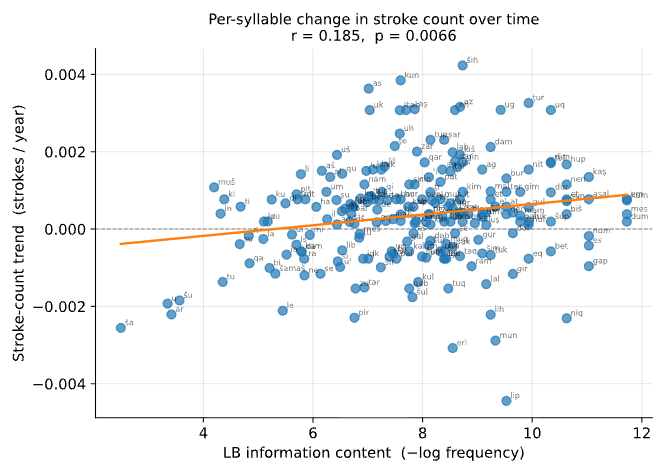
The work runs from Iron-Age Hebrew and Phoenician scribal schools (the “Writing Through Time” project, co-led with Christian Casey, FU Berlin) to Egyptian and Akkadian literary traditions, and into the Hebrew Bible and Dead Sea Scrolls. A recurring theme is an efficiency law — grapheme complexity tracks information content, and the coupling tightens over time. Adjacent efforts include Reed-Pen Paleography (recovering the reed nib’s geometry and grip angle as a scribal biometric) and the invited Oxford Handbook chapter on epigraphy and digital resources for Northwest-Semitic studies.

Reproduction–Variation–SelectionΣΛ kinematic modelComputational paleographyStylometry & authorshipInformation-theoretic efficiency

Key collaborators: Christian Casey (FU Berlin) · Nathan Wasserman (HUJI) · Eli Piasetzky (TAU) · Israel Finkelstein (TAU)

Funding & support: Volkswagenstiftung · Schmidt Sciences
Manifold-Based EstimationManifold-Based Estimation
02

Manifold-Based Estimation

Provable-rate estimation of manifolds — and the geometry riding on them — from finite, noisy, high-dimensional data.

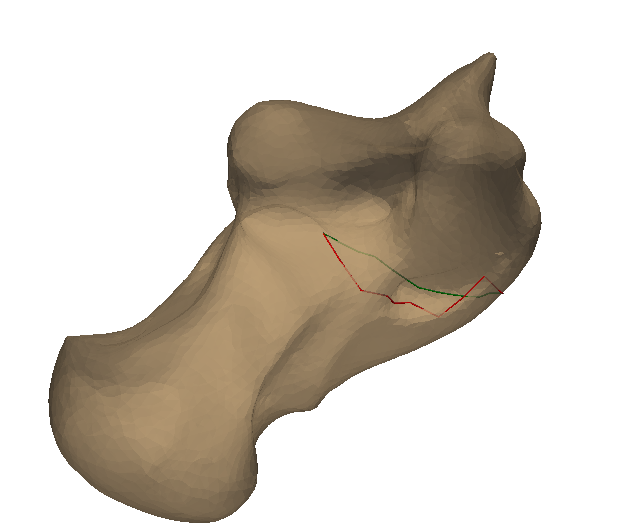
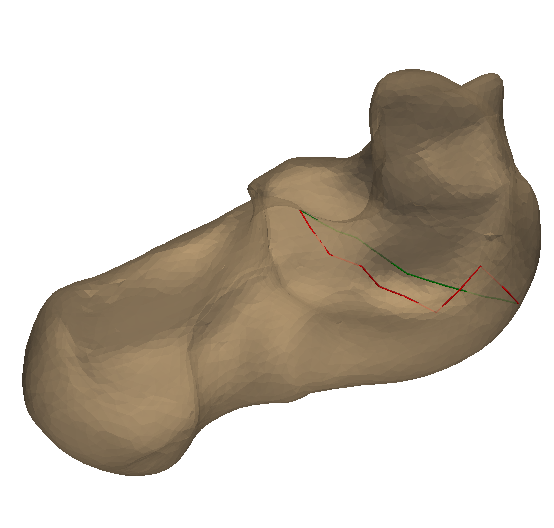
A longstanding methodological collaboration with Yariv Aizenbud (Tel-Aviv University) building the statistical and approximation-theoretic core of the Manifold Moving Least-Squares (MMLS) program. Given noisy samples of a low-dimensional manifold sitting in a high-dimensional space, we estimate the manifold itself — together with its tangent spaces and curvature — directly, without first doing dimension reduction, with linear cost in the ambient dimension and provable convergence rates.

Recent work lifts a pointwise estimator to a global, smooth, Hausdorff-convergent manifold estimate, and connects the geometry back to concrete humanities questions such as the diachrony of Akkadian literature. Along the way the program has surfaced clean theoretical results — including a previously unnoticed equivalence between iterative least-squares regression and Principal Component Analysis.

Moving Least-SquaresOptimal ratesTangent & curvature estimationGeodesic distancesLS–PCA equivalence

Key collaborators: Yariv Aizenbud (TAU) · David Levin (TAU) · Ingrid Daubechies (Duke)

Hyperspectral Imaging of Inscriptions
03

Hyperspectral Imaging of Inscriptions

Non-invasive spectral imaging that both reveals unreadable ancient ink and characterizes the materials that made it.

The lab’s imaging engine — the Spectra half of our name — documents inscriptions with multispectral (MSI) and hyperspectral / reflectance imaging spectroscopy (HSI/RIS). Because a hyperspectral scan captures a full spectrum at every pixel, a single acquisition can both enhance legibility of faded or invisible ink and characterize materials (ink stratification, spectral clustering). This is the first hyperspectral-imaging lab for the Humanities in Israel, and the in-house data source for our paleography and reed-pen work.

The approach has produced concrete discoveries — a previously unnoticed Iron-Age inscription on the reverse of Arad ostracon 16, revealed via MSI, and a newly imaged Hebrew ostracon from Lachish. Planned expansion adds full VNIR–SWIR reflectance capability and a spectral database of Iron-Age inscriptions.

MSI / HSI / RISVNIR–SWIR datacubesPCA + MNF enhancementInk stratificationSpectral databases
See the Imaging Lab & request documentation →

Featured directions

Onomastic Diversity & Social Dynamics
Foundational result

Onomastic Diversity & Social Dynamics

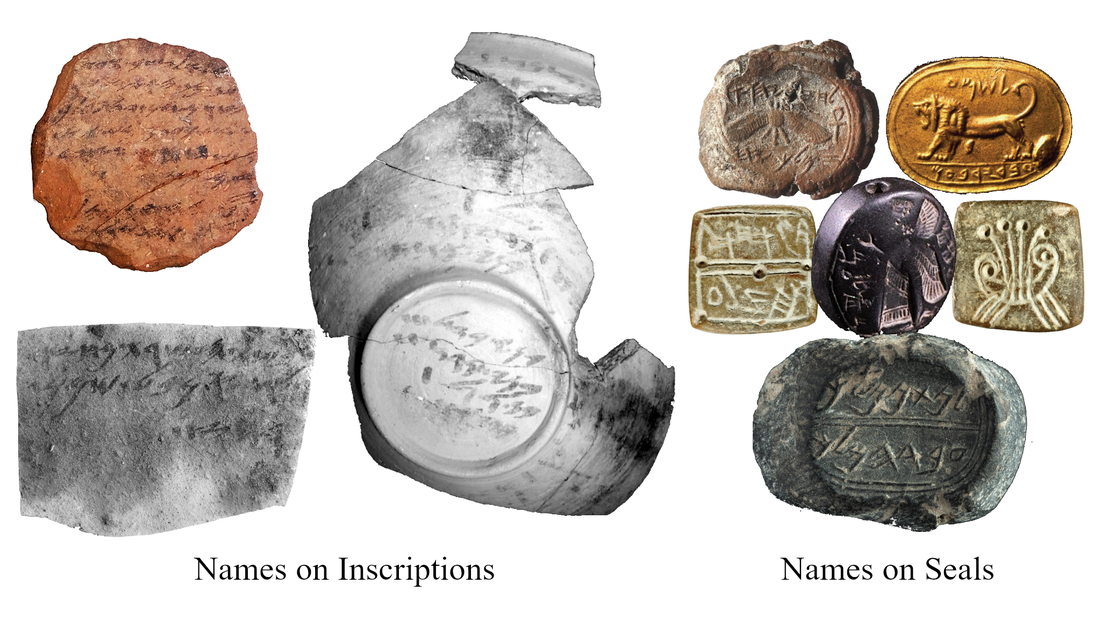
A single, foundational result with an outsized reach. Borrowing diversity statistics from ecology — Hill numbers, evenness curves, and small-sample tests — we read social dynamics from the distribution of personal names preserved on Iron-Age Hebrew inscriptions and seals (PNAS, 2025). The Kingdom of Israel emerges as more cosmopolitan than Judah, with a capital–periphery inversion in late Judah.

The method is deliberately general: it applies to any historical corpus of names, and the same mathematics later seeded a molecular-diversity biosignature for planetary missions in Nature Astronomy — a clean example of how a humanities question can grow a tool that travels far beyond its origin.

Machine Learning in Art Investigation

Machine Learning in Art Investigation

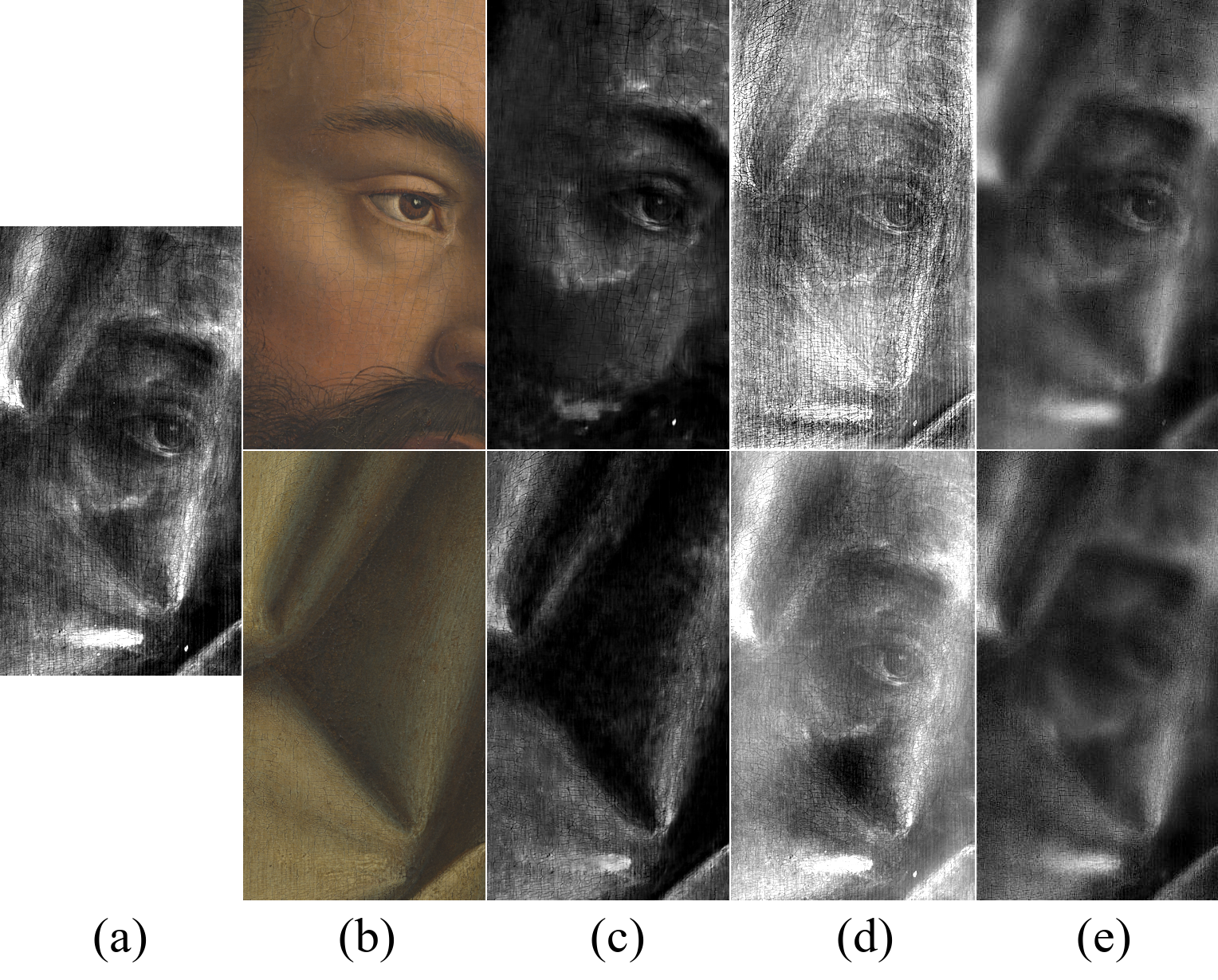
Self-supervised deep neural networks that separate the mixed X-ray images of double-sided paintings, recovering content hidden on the reverse. Our results on two panels of the Ghent Altarpiece improved markedly on prior attempts (Science Advances, 2019), with Ingrid Daubechies, Miguel Rodrigues, and the National Gallery London — the physics sibling of our inscription imaging.

Also in the lab

  • Causal Philology. An empirical, causal-inference framework for how ancient written traditions evolve — bringing explicit causal reasoning to the study of textual change.
  • Dating Akkadian literature. Continuous causal-probing to date Akkadian texts, and to audit what low-resource ancient-language language-models actually encode (with N. Wasserman & G. Stanovsky; Schmidt Sciences).
  • Fractals via neural networks. A theory result: fractals from iterated function systems are representable by neural networks with O(k) parameters (JSAIT, 2020).